Tuesday, March 9, 2010

The Rarest Trans Am

With the exception of factory specials, the rarest of all first-generation Firebirds are the eight Trans Am convertibles built in 1969. Now one of the best is being offered at Dana Mecum's Original Spring Classic Auction in this marvelously restored charter member of that exclusive club. Finished in trademark Cameo White with Tyrol Blue T/A stripes and badges, it sports a matching Blue interior and White top.

What a car.

Photography by Sam Murtaugh, Mecum Auction

A Note From Sir Stirling Moss

DEAR ALL OF YOU,

THE LAST FEW DAYS HAVE BEEN QUITE FANTASTIC AND I'D LIKE TO THANK EACH AND EVERY ONE OF YOU FOR YOUR KIND THOUGHTS, MESSAGES AND OTHER PARAPHERNALIA.

ON SATURDAY EVENING, I WAS AT HOME WITH SUSIE, ELLIOT AND HELEN AND ABOUT TO LEAVE FOR A CURRY, FOR WHICH WE WERE RUNNING LATE. I ASKED HELEN TO JOIN ME IN THE LIFT TO GO DOWNSTAIRS, BECAUSE SUSIE AND ELLIOT WERE SMART ENOUGH NOT TO RIDE IN MY LIFT. I OPENED THE DOOR AND STEPPED INTO THE LIFT, WITH HELEN READY TO FOLLOW ME, WHICH SHE NEVER DID. THAT IS BECAUSE THE LIFT HAD STOPPED ON THE FLOOR ABOVE AND INCORRECTLY ALLOWED THE DOOR BENEATH IT TO OPEN.

STILL CHATTING TO HELEN, I STEPPED INTO THE OPEN DOORWAY--AND FELL TO THE BOTTOM OF THE LIFT SHAFT.

THE AMBULANCE WAS CALLED AND ARRIVED AT RACING SPEED, WHEREUPON THEY PUT ME ONTO A SERIES OF ABOUT 10 STRETCHERS! HAVING FINALLY SETTLED ON WHAT MUST HAVE SEEMED A GOOD ONE, I WAS TAKEN, ALONG WITH MY FAMILY TO THE ROYAL LONDON HOSPITAL IN WHITECHAPEL, WHERE THEY USED ANOTHER BATCH OF SIMILAR STRETCHERS!

THEY DID A GOOD JOB OF HELPING ME, BUT WERE UNABLE TO DO THE REQUISITE SURGERY. SO, ON THE SUNDAY, I WAS MOVED TO THE PRINCESS GRACE, WHERE A FANTASTICALLY EFFICIENT, KIND AND AMUSING STAFF DID ALL THE JOBS.

I AM NOW IN A LOVELY ROOM, NUMBER 222, AND WITH THE HELP OF ELLIOT AND THE PORTER, AM FINALLY ON THE EMAIL. THAT DOES NOT MEAN THAT I WILL BE ABLE TO ACTUALLY SEND THIS TO YOU, BUT I WILL TRY!

NOW FOR THE FUTURE... WHICH I CAN SEE WITH SUSIE, HELEN AND ELLIOT AROUND ME, IS GOING TO BE A BLOODY STRUGGLE!

AS SOME OF YOU MAY KNOW, SUSIE AND I ARE BOOKED ON A SEABOURN CRUISE FOR OUR 30TH ANNIVERSARY, NEXT MONTH. I HAVE TO CROSS THE HURDLE OF GETTING THE DOCORS, AND FAMLY HANGERS-ON, TO ALLOW ME TO THIN MY BLOOD, IN ORDER TO AVOID ANY ISSUES INVOLVING DEEP VEIN THROMBOSIS.

IT WILL BE SIX TO EIGHT WEEKS FROM SUNDAY BEFORE I WILL ABLE TO PUT ANY LOAD ON MY FEET. THEREFORE I'M FACING MY SIXTH OR SEVENTH REDUCTION TO A WHEELCHAIR (SUSIE SAYS SHE'S STOPPED COUNTING) WHICH I MUST ADMIT, IS RATHER BORING. THE GOOD NEWS IS; THAT I DIDN'T SELL THE WHEELCHAIR AFTER THE LAST SHUNT!

THE WHOLE THING IS A REAL PAIN IN THE ARSE, IF I HAD LOOKED WHERE I WAS GOING, I WOULDN'T BE HERE AT ALL, SO IT'S MY OWN DAMN FAULT.

I HAVE BEEN ABSOLUTELY OVERWHELMED BY YOUR COLLECTIVE CONCERN AND KINDNESS.

I CAN TELL YOU THAT CURRENTLY I'M LYING IN HOSPITAL, TAKING DEEP BREATHS, LIFTING ONE ARM WITH THE OTHER, RAISING MY LEGS (WITH PLASTERS ON THE END) AND DOING ALL I CAN DO TO KEEP MYSELF AS MOBILE AS POSSIBLE, BUT, HAVING SAID THAT, I'M NOT YET WINNING THE BATTLE.

I'M NOT SURE WHEN I'LL BE ABLE TO GO HOME BUT THE LIFT HAS TO WORK, OTHERWISE I'LL NEVER BE ABLE TO GET UPSTAIRS IN MY WHEELCHAIR, MAYBE I'LL GO AND STAY WITH HELEN AND ELLIOT FOR A WHILE...

THIS REALLY HAS OPENED MY EYES TO HOW KIND ALL MY FRIENDS ARE, OVER AN OLD EX-RACING DRIVER, FLOGGING A FADING IMAGE!

I LOOK FORWARD TO SEEING YOU SOON,

MANY THANKS FOR ALL OF YOUR THOUGHTS,

CIAO

Saturday, March 6, 2010

1965 Shelby Daytona Coupe


By 1963 Carroll Shelby’s new Cobra had established its supremacy on the short road courses of America, but Shelby and Ford shared a more ambitious goal: to beat Ferrari on the world stage and become the first American team to win the coveted F.I.A. (Federation Internationale de l’Automobile) World Manufacturers Championship for GT cars.

An experimental coupe body designed by Pete Brock was built on an existing Cobra chassis, immediately increasing its top speed by 25 mph; the new car won the GT class at its first race, the 1964 Daytona Continental, prompting Shelby to adopt the name.

Building on that initial success and another class win at Sebring in March 1964, another Daytona Coupe was built in Modena, Italy at Carozzeria Grand Sport, which would go on to build the rest of the six Coupes. The first two Daytonas then competed in Europe, winning important victories at Le Mans and Goodwood. The ’64 Monza Coppa Inter-Europa in Italy, which the Daytonas were almost certain to win, was cancelled by Italian race officials in service to Enzo Ferrari. Team Shelby thus narrowly missed winning the 1964 Championship, prompting Shelby to famously declare, “Next year, Ferrari’s ass is mine!”

Read more here.

Friday, February 19, 2010

The Delmo Johnson Corvettes

Mecum Performance Auctions held their first-ever Monterey sale last year during the Historic Weekend in August. In preparation for that event I flew to California in early June to audit a private collection that was consigned to the Monterey auction. I spent a fascinating couple of days poring over documentation, spec sheets and photo albums, and along the way had the opportunity to drive several highly collectible and incredibly valuable cars - exciting in theory, but a bit intimidating in practice, at least whenever I stopped to consider the price tag on whatever I happened to be driving.


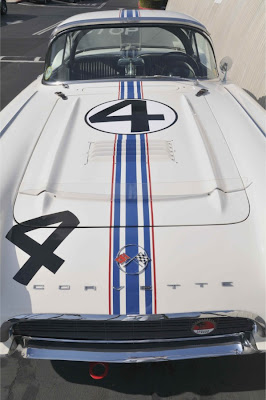
Two of the most interesting cars in the collection were factory-prepared Corvettes originally raced by Texas Chevrolet dealer Delmo Johnson and his friend and co-driver Dave Morgan, whose partnership excelled in SCCA A-Production competition. The owner of the collection arranged for me to call Delmo for an interview which, as sometimes happens, never made it into the promotional materials for the auction.

So here for the record I am pleased to share Delmo Johnson’s thoughts on campaigning these two Corvettes in the golden era of American road racing:

On the 1962 Corvette
:


We did well at Sebring in 1962- I enjoyed racing that car. We always used cerametallic brakes but that was the first car to use forward self adjusters and the expanding shoe package. Of course they originally had conventional reverse self adjusters which were no good during a race. Before Sebring I kept asking Zora, “do you want us to spin out a lot?”, because the only way to adjust the brakes was to apply them while the car was in reverse. So he finally sent us brakes with forward adjusters for Sebring, but then those worked too well! We had great brakes for the first two hours, then none for the next ten, which wasn’t that big a problem for us; we were able to adapt to that without too much trouble.


After the race the mechanics put the car up on jacks right away because they wanted to have a look at the brakes, and boy, they were surprised- the linings were long gone, just the t-shaped shoes were left and they were metal-to-metal with the drums. But we finished high anyway, first in GT by our scoring but officially we came third in GT.


That car was a winner. We (Johnson and his racing partner Dave Morgan) had a lot of confidence in it. Just to mess with the competition we’d load a six pack and a small tool kit into the car and drive it to the races- that got into their heads. Then Morgan took to racing an open wheel formula car sometimes in support races so we put a hitch on the Corvette and showed up with the formula car on a trailer out back. And that really shook ‘em up.


The stock engine was really good. When a new one came from Zora we would take it apart and blueprint it, because the stock specs were just right for the 327. You might get one with the bore angle at 89, maybe even 87 degrees to the deck, so we’d bore it out and straighten it to 90 degrees, things like that just to make sure everything was exactly the way it should be. If you did that, those 327s would run all day long and make all the power you’d ever want. In fact, if you kept them at 6,500 RPM they’d last forever. Of course, most guys couldn’t hold back like that, and they all learned the hard way that you can’t run for long at 8,000 RPM.


You learned something every time you raced, and we always rebuilt what we didn’t like, but Chevrolet made that ’62 so that right off the showroom floor it was a very useable race car. We added an oil cooler, maybe a rear end cooler, stuff like that, but Zora did a very good job designing and building those cars.


On the 1963 Z06:

There was nothing special or secret in that car, we ordered it through the dealership on a normal order pad. Mind you, we were in constant communication with Zora, and we know he had some influence with the assembly, but I couldn’t say what, specifically. Chevrolet usually began annual production around September 15 and we normally did not receive a new car until late December, but we got the Z06 in time to run a few races in the Dallas area and develop it before Sebring.


That was the first car with two-bar spinners for the knock off wheels. They came in a “race box” Zora sent us. We ran into a problem right away: the right side wheels fell off the first couple of times we tried them, because they had sent us four right-side spindles. So Zora sent us a pair with reverse threads and that solved that.


We did a lot of test work for Zora. He’d design some piece and send it to us in a box, we’d test it and if it failed we’d send it back so he could determine why and redesign it to correct the problem. Sometimes we’d hear about it from Zora and other times we never heard from him again. Every time we went racing we’d have something experimental on the car, but we always had the original part for back-up so that we could change it back if it broke. But racing was how Chevrolet improved their cars. Positraction, brakes, 2-by-4 carbs, fuel injection, the small-blocks, the big blocks; almost all those things, and a lot of accessories, came from Chevrolet’s racing program. That was just how they did it then.
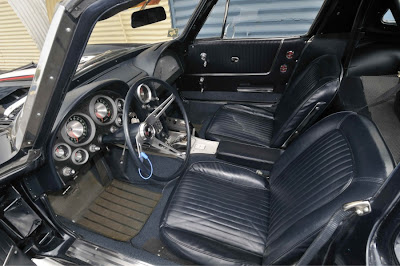


The basic Z06 was always a good race car. Sometimes stuff broke, but we were very active racers so that was bound to happen. We raced fifty weekends a year, and the only reason we didn’t race fifty-two was that no-one held a race on Easter Sunday or Christmas Day. We raced from Mexico City to Chicago, Phoenix to Nassau; all over the Southeast. But it was just too far to go to California too often or to the Northeast- you could waste a whole day driving two thousand miles, you know.


For most of us there were only two reasons to race: a few did it to make money, but for most of us it was just because it was so darn much fun. We had a lot of great times and made a lot of good friends and memories.


We were serious about the racing itself, though. The first time out with the Z06 was at Caddo Mills; I got stuck behind a guy in an older Vette who was obviously slower but there just wasn’t enough room to get clean around him. So I approached him afterwards and said, “hey, my car is faster, why don’t you be a good sport and let me past so I can race?” And he starts talking about how Delmo Johnson is more worried about his bright shiny new car than about winning. He said “If you’re so fast, then pass me." So I took my key and ran it along the side of the Z06, and I looked at him and said, “I don’t give a shit about the car. I’m here to race, so if that’s how you want it, that’s fine with me". Next time out, he saw me coming and moved right over.

But that sort of thing didn’t happen too often; it was mostly just a lot of fun.


You can read more about Delmo Johnon's 1962 Corvette racer here, and about the 1963 Z06 here.

Wednesday, February 17, 2010

Sleeping Beauty

The Z06 is in storage until late April, after which, lore tells us, all those showers bring May flowers. But an early spring has arrived here in Vancouver along with the Winter Olympics,  and with the recent warm and sunny weather I may very soon be taking RT66 out for its first drive of the year.

Vette Garage: The Series

I’m way behind when it comes to watching YouTube, but I have found an excellent cable-style series online in Vette Garage, The Series, broadcast in HD. It’s all about Corvettes, without all the screaming and yelling of American Chopper or any of the other “reality conflict” junk out there (I had to hand it to the guys at Pink Slips when they took all the starting line squabbling out of the show and unleashed drag racing’s inherent sportsmanship).


There are presently four installments, the first three covering Pfadt Race Engineering as the crew begins development on its C6 Z06 racer in Utah. Episode 4 tells the story of Corvette Recycling, one of the largest operations of its kind - you won’t believe how big these guys really are.

The series’ target audience could not be more well-defined: Corvette lovers. And they come in all ages, shapes and sizes, because almost everyone loves the Corvette.

Vette Garage, The Series is a huge hit with Corvette fans. Here is the first installment:


Corvette enthusiasts rejoice; this is exactly what we want to watch.

TubeFilter.tv gives it a big thumbs up.
Here is their home page - catch all four episodes and read the reviews.

Thursday, February 11, 2010

The Great Exploding Pinto

In August 1972 my friend Jim Leishman and I took the bus from Hamilton, Ontario to Niagara Falls, New York for a big show at 1320 Dragway (Sundaaayyyy!!!! Niagaraaaahh!!!!). It was a solid big-name Top Fuel and Funny Car show, the kind they screamed about on the radio during the week. Along with the local talent, all the big guns were there: Snow, Schumacher, The Hawaiian, the Mickey Thompson Pinto; Chris Karamasines, a young Jeb Allen, Tommy Ivo and yes, Big Daddy Don Garlits and Tommy Lemon. I was a wide-eyed fourteen year old and loved every second of it; it was like spending an entire weekend in the pages of Drag Racing USA.

Come the final rounds, the light was fading on Dale Pulde's Mickey Thompson Pinto and Gene Snow's Snowman Charger, the last survivors of the Funny Car field. When the cars fired the Pinto sounded like it was packed with dynamite. I thought at the time that maybe driver Pulde had piled on the nitro, as he'd been known to do on occasion. Whatever the reason, its engine note was sharp and loud. I shouted to Leishman that I thought the Pinto was going to blow, and off I bolted toward the finish line. Both cars roared through their burnouts behind me as I ran at full speed along the slope bordering the track. They lined up just as I scrambled down the hill to watch them launch from about a thousand feet away, separated only by a couple of steel cables lining the edge of the asphalt.

The Pinto left hard, way out ahead of Snow. Sure enough, it blew to smithereens right in front of my eyes at well over two hundred miles an hour. It was magnificent. Fans scrambled to retrieve the pearl red fiberglass shards and the bits of blower that rained down. Pulde and the crew posed for photographs with what was left of the car, and on their way back to the pits they threw Peter-Paul candybars to the cheering crowd.

As if that wasn't enough, the very next race was the Top Fuel final, in which Don Garlits beat a tearful Jeb Allan and set a new national record at 6.10/244MPH, breaking Clay Harris' mark by .24 seconds and 9MPH, a big fat country mile. Big Daddy celebrated with a huge fireworks show. It was all great.

What's special to me now about the story of the Great Exploding Pinto is that 35 years later, I found this photo at draglist.com.